
Building Day-One Confidence: Smarter Onboarding Packets for Aviation Teams

Freepik
In the aviation industry, employers set the tone for safety, performance, and trust from the moment a new hire starts. Onboarding packets are often the first real signal of how organized, supportive, and prepared an operation truly is. When materials are clear, well-paced, and thoughtfully designed, new employees gain confidence faster and make fewer early missteps. Done right, onboarding becomes a strategic advantage that strengthens culture and shortens ramp-up time from day one.
Key Takeaways
● Onboarding packets should balance regulatory clarity with human context.
● Structure and pacing matter as much as the content itself.
● Consistent formats and engaging delivery improve comprehension across teams.
● Thoughtful onboarding strengthens culture and reduces early turnover.
What New Hires Actually Need on Day One
Before listing documents, it helps to anchor on intent. A new hire’s first question is rarely “Where is the policy?” but rather “How do I succeed here without messing up?” Strong onboarding packets answer that question directly and calmly.
Below are core elements aviation employers consistently find valuable when shaping first-day materials:
● Clear role expectations tied to safety, compliance, and team impact
● A plain-language overview of operational standards and reporting lines
● Safety and compliance essentials prioritized over secondary policies
● Cultural cues about communication norms, accountability, and escalation
● Practical next steps for the first week, not the first year
This kind of framing helps new hires feel oriented instead of overwhelmed.
Designing Materials That Work Across Locations
Aviation teams are rarely centralized. Some employees are remote, others are on-site, and many move between environments. That reality makes consistency critical. When onboarding packets look and behave differently depending on who sends them, confusion follows.
Providing training materials in uniform, easy-to-open formats helps eliminate friction before it starts. Converting documents into stable formats ensures that instructions, visuals, and layouts appear exactly as intended, regardless of device or location. Tools that let teams change Word into PDF format using a reliable online converter help preserve formatting and prevent accidental edits.
Pacing Information for Clarity and Retention
One common mistake is treating onboarding as a data dump. Aviation environments are complex, but that does not mean everything must be taught at once. Effective packets respect cognitive load.
Information should unfold in layers: what someone must know today, what they should understand this week, and what can wait until later. This pacing improves retention and lowers anxiety, especially in safety-critical roles where confidence matters.
A simple way to apply this approach is to audit your packet flow step by step:
● Start with safety, compliance, and immediate responsibilities
● Follow with team structure and communication expectations
● End with references, deep policies, and optional learning resources
This sequencing keeps attention where it belongs during the first days on the job.
Comparing Delivery Formats for Different Teams
Choosing how to deliver onboarding materials is just as important as what they contain. Aviation employers often blend digital and physical formats to match operational realities.
Here is a high-level comparison to guide those decisions:
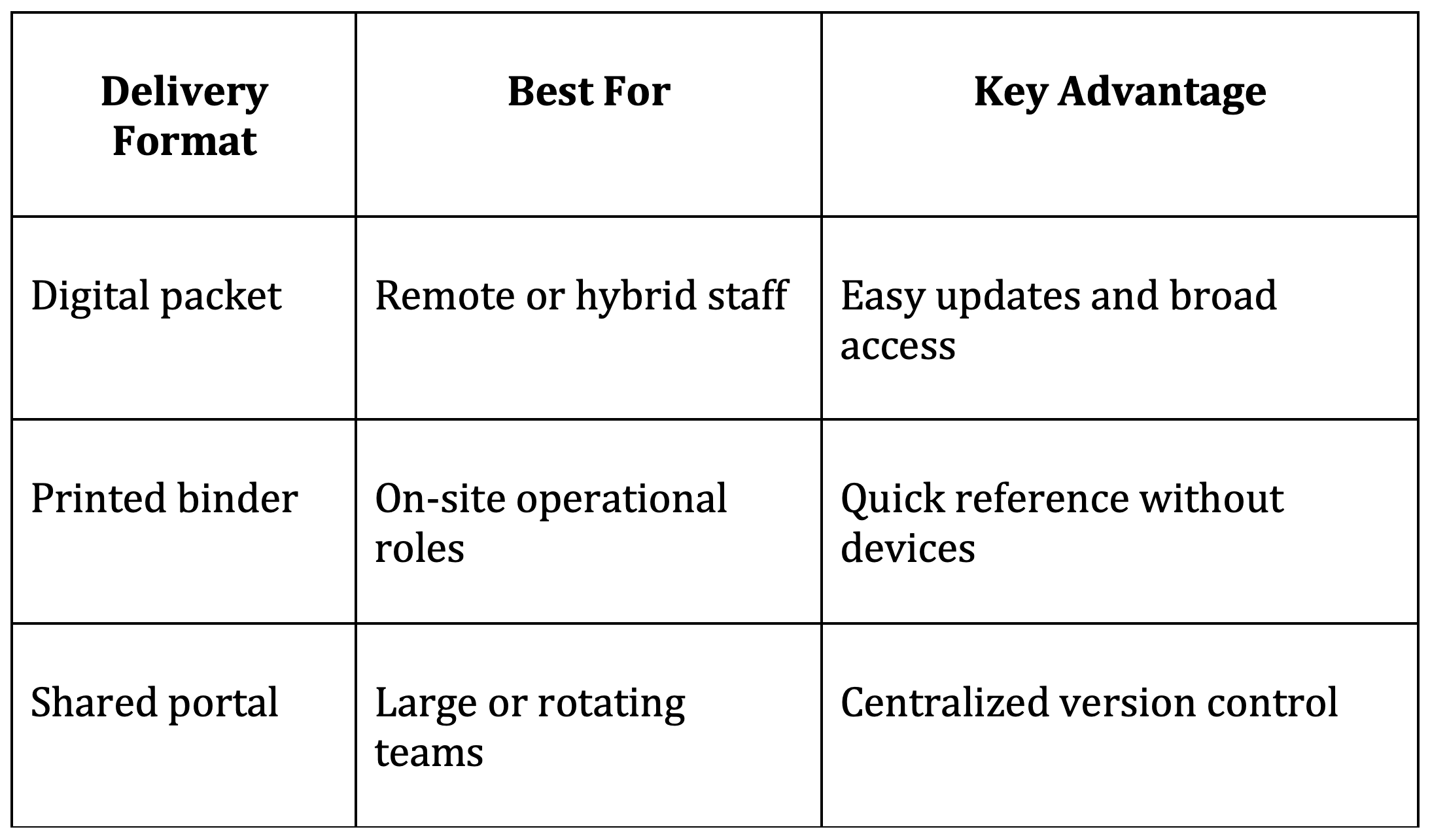
Selecting the right mix helps ensure no one is disadvantaged by how or where they work.
Practical Questions Aviation Employers Ask
Before finalizing onboarding packets, decision-makers often want clarity.
What makes an onboarding packet effective in aviation environments?
An effective packet prioritizes safety, compliance, and role clarity above all else. It uses plain language, logical sequencing, and consistent formatting to reduce interpretation errors. Most importantly, it anticipates the real questions new hires have in their first days.
How long should an onboarding packet be?
There is no perfect length, but shorter is usually better at the start. Employers should aim to cover what is essential for the first week and provide references for deeper material later. This approach prevents overload while still meeting regulatory needs.
Should onboarding differ between flight, maintenance, and office roles?
Yes, the core structure can stay the same, but role-specific sections are critical. Tailoring examples and expectations helps each group see how policies apply to their daily work. This increases relevance and engagement.
How often should onboarding materials be updated?
At minimum, review packets annually or after any regulatory or procedural change. In aviation, outdated information can create real risk. Regular reviews also signal professionalism and care.
Can good onboarding really reduce ramp-up time?
Yes, when new hires understand expectations and workflows early, they make fewer mistakes. Clear onboarding reduces repeated questions and accelerates confidence. Over time, this shortens training cycles and improves performance consistency.
Bringing It All Together
Onboarding packets are more than paperwork; they are an early operational tool. For aviation employers, thoughtful design, clear pacing, and consistent delivery create confidence where it matters most. When new hires feel informed and supported from day one, safety improves, culture strengthens, and teams reach effectiveness faster. Investing in onboarding quality pays dividends long after the first day.